
Moving house is one of the most significant events in a person's life — exciting, yes, but also genuinely stressful if packing is not done right. Professional packers and movers in India handle thousands of relocations every year, and the difference between a smooth move and a chaotic one almost always comes down to how well things were packed.
At KCM Packers and Movers, with over 15 years of house shifting experience across India, we've identified the packing mistakes that cost people money, time, and their favourite belongings — and the professional habits that prevent them. In this guide, we share our 10 most essential packing tips that our expert crews use on every single move.
1. Start Packing 2–3 Weeks Before Moving Day
The single biggest mistake people make is leaving packing too late. Trying to pack an entire home in 48 hours is not just stressful — it leads to careless packing, forgotten items, and higher risk of breakage. Professional movers recommend starting at least 2–3 weeks ahead of your moving date.
Begin with rooms and items you use least — spare bedrooms, loft storage, seasonal clothes, books. Work gradually towards everyday items like kitchenware and bathroom essentials, which should be packed last. This staged approach keeps your home functional right until moving day.
💡 Pro Tip: Create a room-by-room packing schedule with target completion dates. Tick off each room as you finish it — the visible progress will reduce your stress significantly.
2. Invest in the Right Packing Materials
Using supermarket boxes and old newspaper might seem like a money-saver, but it's false economy. Weak boxes collapse under weight. Newspaper ink transfers onto porcelain and fabrics. The cost of replacing damaged items far exceeds the small savings on materials.
For a professional-quality pack, you need:
- Double-walled corrugated cardboard boxes — in multiple sizes — heavy items in small boxes, lighter items in large boxes
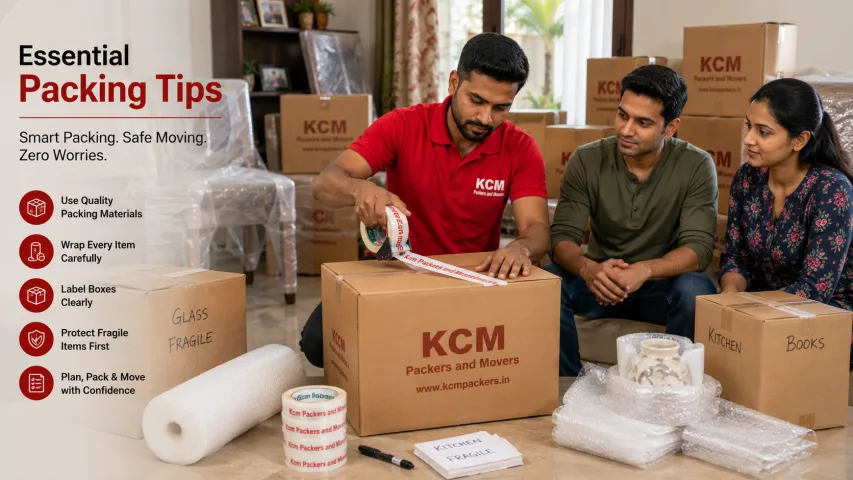
- Bubble wrap (3mm and 10mm) — for fragile items like glassware, crockery, picture frames, and electronics
- Packing paper / tissue paper — for wrapping individual items without leaving ink residue
- Strong packing tape — (48mm width minimum) — cheap tape fails under load and temperature changes
- Stretch wrap / plastic wrap — for protecting upholstered furniture, mattresses, and bundling loose items
- Marker pens — in multiple colours for labelling boxes by room and contents
3. Label Every Box with Room AND Contents
An unlabelled box is useless until it's opened. A box labelled "Kitchen" is better. A box labelled "Kitchen — Everyday plates, glasses, mugs" is how professionals do it. At your new home, you (or your movers) need to know exactly where each box goes without opening every one.
Use a colour-coding system — a coloured tape strip or marker corresponding to each room. Mark the top and at least two sides of every box. Add a "FRAGILE" or "THIS SIDE UP" marking wherever relevant.
Keep a master inventory list on your phone — either a simple notes app or a spreadsheet. Number each box and log what's inside. This becomes invaluable if any item goes missing or if you need to find something urgently in a sea of boxes after moving in.
4. Pack Heavy Items in Small Boxes
This is one of the most violated packing rules and one of the most common causes of injury and box collapse. Books, tools, kitchen appliances, and tiles are dense and heavy. Packing them in large boxes makes those boxes impossibly heavy to lift and likely to break under their own weight. Always pack heavy items into small, rigid boxes that can be lifted comfortably by one person. Large boxes are for lightweight items like pillows, bedding, and clothing.
5. Never Leave Empty Space in Boxes
Empty space inside a box causes items to shift during transit, leading to collisions, breakage, and crushed corners. Fill every gap with packing paper, bubble wrap, rolled-up clothing, or foam peanuts until the box feels solid and nothing moves when you shake it gently.
This principle is especially important for boxes containing fragile items. Imagine each glass or plate individually suspended in a soft cocoon of cushioning material — that's the standard our professional packers use.
6. Disassemble Furniture Carefully and Keep Fixings Together
Beds, wardrobes, study tables, and bookshelves almost always need to be disassembled for safe transport. The most common post-move complaint? "I can't find the screws for my bed frame." The solution is simple: place all bolts, screws, and fixings into a small zip-lock bag and tape it directly to the corresponding piece of furniture or label it clearly.
Also photograph complex furniture assemblies before dismantling — the photos become your re-assembly guide at the new home and prevent the frustration of trying to remember which panel goes where.
7. Pack a "First Night" Essentials Box
This is one of the most practical packing tips from professional movers: pack a clearly labelled box (or bag) that contains everything you need for your first 24 hours in the new home. This should stay with you — not on the moving truck.
What to include in your First Night Box:
8. Pack Electronics with Their Original Boxes — or Better
Original manufacturer packaging is designed to protect the device in transit. If you have it, use it. If not, wrap each device in anti-static bubble wrap (not regular plastic wrap, which can cause static build-up), then box it in a snug-fitting carton with foam padding around all sides.
For televisions and large monitors, professional movers use custom-built TV crating boxes with foam inner frames. Take photos of all cable connections before disconnecting anything — this saves hours of frustration during re-setup. Label cables with masking tape flags.
9. Sort and Declutter Before You Pack
Moving is the best opportunity to declutter. Transporting items you don't use, don't need, and will never use wastes money and effort. Before you start packing any room, do a ruthless sort: Keep, Donate, Sell, and Discard.
The rule of thumb: if you haven't used something in 12 months and it has no sentimental or financial value, it doesn't deserve a place in your new home. Every item you don't move is money saved on packing materials and transport weight.
10. Consider Professional Packers for Fragile and High-Value Items
Even if you're comfortable packing general household items yourself, fragile and high-value items deserve professional handling. Antiques, artworks, wine collections, custom furniture, and sensitive electronics require specialist packing techniques, purpose-built materials, and sometimes custom wooden crating.
A professional packing team from KCM Packers and Movers doesn't just wrap items — they assess each piece and apply the optimal packaging method. For items covered under our goods insurance, professional packing by our team also streamlines any potential claims process.
Quick Pre-Move Packing Checklist
The Safest Option: Let the Professionals Handle It
While these tips will significantly improve any self-pack move, there is no substitute for a fully professional packing service. Our trained crew at KCM Packers and Movers arrives with all required materials, handles every item with expertise, and ensures everything is packed to survive the rigours of road transport across India.
We offer complete household relocation services including packing, loading, GPS-tracked transport, unloading, and unpacking — all covered by comprehensive transit insurance. One call handles everything.