
Every year, thousands of families and businesses across India move their belongings from one place to another — and discover too late that they were not adequately insured when something goes wrong. A shattered television, a waterlogged sofa, a missing box of valuables — these incidents are rare, but when they happen, the financial and emotional impact can be significant.
Moving insurance — or transit goods insurance — is one of the most important, and most frequently misunderstood, aspects of any relocation. This guide explains every dimension of it: what it is, what the different coverage types mean in practice, how the claims process works, and how to choose the right level of protection for your move.
What is Transit Insurance for Moving?
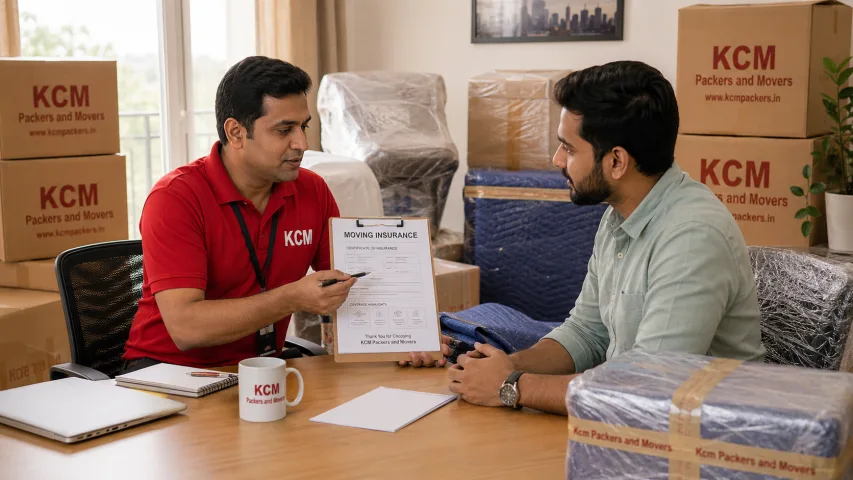
Transit insurance — also called goods-in-transit insurance or moving insurance — is a policy that financially protects your belongings against loss or damage while they are being transported from one location to another. It covers the period from when the movers collect your goods to when they deliver them at your new address.
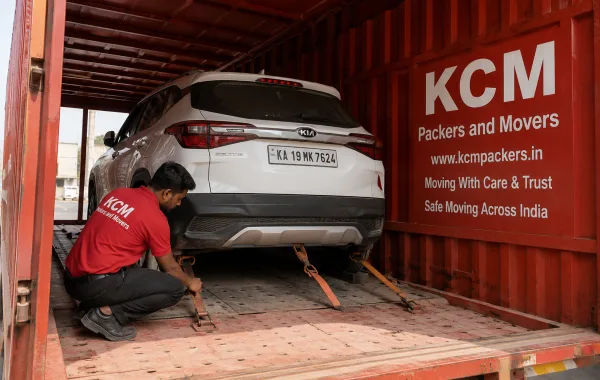
Storage insurance extends this protection to goods held in a warehouse or storage facility during the interim period. Vehicle transit insurance covers cars and motorcycles transported on carriers.
Transit insurance for household moves in India is underwritten by licensed general insurance companies and regulated by IRDAI (Insurance Regulatory and Development Authority of India). This means any valid policy has legal force and the insurer has regulatory obligations for claim settlement.
The Reality Check
The average Indian household move involves goods worth ₹5–20 lakhs. Road accidents, vehicle fires, floods, and loading/unloading incidents are uncommon — but they happen. In one year of professional moving operations, even a company with 99.9% perfect moves will have incidents. Without insurance, you bear the full cost of that 0.1%.
The Three Types of Moving Insurance in India
Not all transit insurance is equal. The type of coverage matters enormously, and many people discover the limitations of their policy only after filing a claim. Here is a clear breakdown of the three coverage levels:
Basic Transit Cover (Named Perils)
Included with All KCM MovesThe most basic form of transit insurance. Covers only the specific risks named in the policy — typically fire, lightning, vehicle accident, theft, and natural calamities. If your goods are damaged by something not listed (e.g., accidental breakage during loading), the claim will be rejected.
- ✓Fire and explosion during transit
- ✓Road accident causing goods damage
- ✓Theft and burglary from vehicle
- ✓Natural calamities (flood, cyclone)
- ✓Lightning strike to transport vehicle
- ✗Accidental breakage during packing/loading
- ✗Water damage from rain (if vehicle was intact)
- ✗Scratches and surface cosmetic damage
- ✗Electrical or mechanical breakdown of goods
Standard Protection (Broad Perils)
Most Popular ChoiceA significantly broader policy that extends named-perils coverage to include more accident scenarios and handling incidents. Suitable for most household and office moves involving electronics, appliances, and moderate-value items.
- ✓All Basic Cover perils
- ✓Accidental damage during loading/unloading
- ✓Water ingress and flood damage
- ✓Electronics and appliance damage
- ✓Collision damage to containers/crates
- ✗Pre-existing damage (documented at inspection)
- ✗Damage from customer's own packing
- ✗Inherent defects in items
- ✗Perishables, cash, and undeclared valuables
All-Risk Comprehensive Cover
Maximum ProtectionThe gold standard of moving insurance. Covers all causes of loss or damage except specific named exclusions. If your goods are damaged for any reason not explicitly excluded in the policy, you are covered. Recommended for high-value items, international moves, and businesses.
- ✓All Standard Protection perils
- ✓Any accidental cause of damage
- ✓International shipments (sea and air)
- ✓High-value items up to declared value
- ✓Storage and warehousing cover
- ✓Dedicated claims manager assigned
- ✗War, nuclear risk, government seizure
- ✗Deliberate damage by policyholder
- ✗Contraband or illegal goods
- ✗Gradual wear and tear
Declared Value: Why Getting It Right Matters
The declared value of your goods determines your insurance premium and — critically — the maximum you can claim. There are two common mistakes people make with declared value:
Under-Declaring (Most Common)
People declare a lower value to reduce their premium. If you declare ₹2 lakhs but your actual goods are worth ₹10 lakhs, any claim will only pay out in the same ratio — 20% of the actual loss. This is called "under-insurance" and is the most expensive mistake in moving insurance.
Not Itemising High-Value Goods
General household declarations often cap individual item payouts. A ₹1.5 lakh television or a ₹2 lakh piece of jewellery needs to be specifically declared and valued to receive full replacement value. Grouped declarations typically have per-item limits.
How to Calculate the Right Declared Value:
- List every item being moved by category (electronics, furniture, appliances, clothing, etc.)
- Estimate the current replacement value (not original purchase price) for each category
- For items over ₹50,000, list them individually with their estimated current market value
- Add up the total — this is your declared value
- When in doubt, err on the higher side — the premium difference is usually minimal compared to the coverage increase
How the Claims Process Works
Understanding the claims process before you need it saves significant stress if an incident occurs. Here's how it works with KCM Packers and Movers's goods insurance programme:
Before signing the delivery receipt, inspect every item. If damage is visible, do not accept and sign without noting it. Photograph all damage on the spot before any items are moved or unpacked further.
Notify within 24 hours of delivery (or discovery for concealed damage). Do not attempt to repair or dispose of damaged items before they are inspected.
Our claims team sends you a straightforward claim form. Required documents typically include: the claim form, pre-move inventory, condition inspection report, delivery receipt, and damage photographs.
For claims above a set threshold, a licensed IRDAI-authorised surveyor is assigned within 48 hours. The surveyor verifies the damage, references the pre-move condition report, and submits their assessment.
Standard Protection claims settled within 72 hours of approval. All-Risk claims within 48 hours. Payment directly to your registered bank account.
5 Questions to Ask Your Mover About Insurance
Before booking any packers and movers company, ask these five questions about their insurance programme. The answers will immediately distinguish professional, accountable movers from those who treat insurance as an afterthought:
→ Reputable movers like KCM include basic transit insurance in all moves. If insurance is entirely optional and the base service has none, reconsider.
→ This distinction is enormous. Named perils policies have far more claim rejection scenarios than all-risk policies.
→ Understanding this prevents the shock of a reduced payout for a high-value item that wasn't specifically declared.
→ Without a documented baseline of condition, any damage claim becomes a "he said, she said" dispute. A pre-inspection is essential.
→ Any legitimate transit insurance in India must be underwritten by an IRDAI-licensed insurer. If the mover cannot name the insurer, the coverage may not be legitimate.
Insurance for Specialised Moving Scenarios
International Relocation Insurance
International moves involve additional risk scenarios — sea freight, port handling, customs inspections, and climate changes during long-haul shipping. Standard domestic transit policies do not cover international shipments. Our international relocation service includes marine cargo insurance and air freight insurance options for comprehensive global coverage.
Vehicle Transport Insurance
Your vehicle's own motor insurance typically does not cover damage during transport by a third-party carrier. Specific vehicle transit insurance is separate and should be confirmed before any car or bike transport booking.
Storage Insurance
Goods insurance should extend to the storage period if goods are being warehoused between moves. Our warehousing service includes coverage options that protect stored goods against fire, flood, and theft throughout the storage period.
The Bottom Line on Moving Insurance
Moving insurance is not an upsell. It is fundamental financial protection for an activity that carries genuine — if small — risk. The cost of comprehensive moving insurance is a fraction of 1% of the total value of goods. The cost of moving without it, if an incident occurs, can be devastating.
At KCM Packers and Movers, our goods insurance service provides transparent, IRDAI-backed coverage at every level — from basic inclusion in all our moves to comprehensive all-risk policies for high-value international shipments. Our claims team is in-house, our pre-inspection process is rigorous, and our settlement process is among the fastest in the industry.